

Blog
Wholesale Furniture Bulk Pricing for Living Room and Bedroom Collections: A 2026 Guide for US Retailers


Bulk pricing in wholesale furniture is simple in principle and confusing in practice. The principle is that per-unit cost improves as order volume grows. The confusion comes from the fact that most distributors sell through more than one ordering route, and the volume that earns a better price on one route is not the volume that qualifies you on the other.
Read the two routes side by side and they can look like a contradiction. One says there is no minimum order at all. The other says the order has to fill a 40-foot container. Both are true, of different routes, and which one your store can realistically use depends on something most buying guides never mention: the balance between upholstery and case goods on your own floor.
Global Furniture USA is a wholesale furniture distributor based in East Brunswick, New Jersey, supplying bedroom, dining, living room, reclining and specialty collections to retailers across the United States and international markets. This guide explains how bulk pricing works across its two ordering routes in 2026, and why your living room to bedroom mix is what decides which route you should be quoting.
Two Ordering Routes, and Bulk Pricing Works Differently on Each
Before comparing any numbers, establish which route a quote refers to. They are not variations of the same thing.
- The domestic warehouse route ships from stock already held in the United States, from a distribution network supported by partner facilities in New Jersey and Florida. There is no fixed minimum order quantity, and most warehouse orders go out within two business days and within ten business days at the latest.
- The container program is the import route. It is built around a 40-foot container filled from product stocked in Malaysia and Vietnam. There is no minimum quantity per SKU on a mixed order, so bedroom, dining, living room and accent pieces can be combined freely, but the order does have to fill one 40-foot container. A single SKU ordered on its own fills the container by itself.
Pricing is volume-tiered on both routes, so per-unit cost improves as order volume grows either way. What changes between them is the shape of the commitment: the domestic route has no volume floor at all, and the container program has one floor, the container itself. Any approved dealer can use it, and it is not a separate tier requiring extra approval.
The mechanics of minimum orders, pricing structure, payment terms and lead times are covered in full in our guide to wholesale bedroom furniture minimum orders and pricing. The rest of this article takes the next step, which that guide does not cover: working out whether your own category mix can fill a container in the first place.
Living Room and Bedroom Fill a Container at Very Different Rates
This is the part that decides which route a given retailer should be pricing, and it is rarely spelled out.
A container is filled by volume, not by unit count. Living room seating is upholstered, three-dimensional and largely air: a reclining sectional occupies a great deal of cubic space for one selling unit. Bedroom case goods are denser and pack far more efficiently, and a bedroom group is several pieces, a bed, dresser, mirror, nightstand and chest, so unit count climbs quickly while cubic space climbs more slowly.

The practical result is that an upholstery-weighted order reaches a full 40-foot container on relatively few selling units, while a bedroom-weighted order can hold many more units inside the same container.
Catalog breadth points the same way. At the time of writing the wholesale bedroom range runs to more than 800 listings across collections, beds, dressers, chests, nightstands and mirrors, while the wholesale living room range runs to more than 200 across reclining collections, sectionals, sofas, loveseats, recliners and sleeper sofa beds. A retailer building a container has far more bedroom variety to draw on to fill remaining space without repeating a SKU.
Neither pattern is better. The point is that filling a 40-foot container means something quite different to a store whose floor is mostly upholstery than to one whose floor is mostly bedroom, and a retailer should work out which side of that line it sits on before deciding whether the container route is realistic this season.
Components Change the Arithmetic on Both Routes
Global Furniture USA lists individual components as orderable items alongside complete groups, running to several hundred listings: headboards, footboards, side rails, slats, table tops, bases and legs, along with sectional wedges, chaises and armless pieces. For bulk ordering this matters more than it first appears.
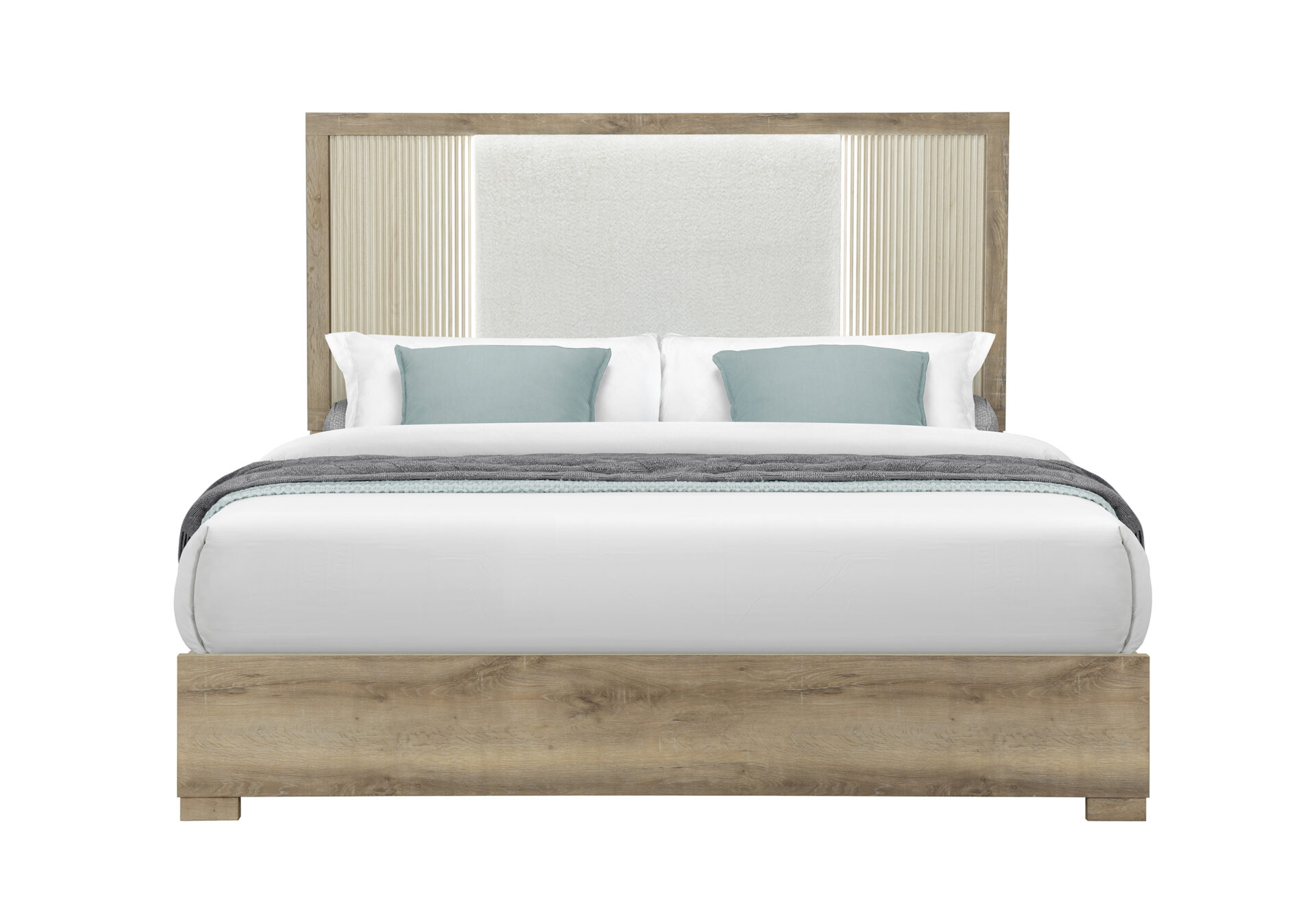
- On the container route, components are how a retailer tops up remaining space with pieces that actually sell, rather than adding a whole group it does not need just to close out the load.
- On the domestic route, components are how a store replaces a single damaged part instead of writing off a complete set.
Either way, a buyer planning a bulk order should look at the component listings, not only the collection listings, before deciding the order is full.
Build the Order Before You Ask for the Price
The Bulk Shop lets a retailer assemble a bulk cart across every category in one place, filtered by bedroom, dining, living room, occasional, decor and components. Two things about it are worth knowing before a first bulk order.
- It shows stock status against each item, so a buyer can see which listings are in stock and which are on backorder while building the cart, rather than finding out after the quote.
- It does not show prices to the public. Each line reads “Login to see prices”, because dealer pricing is released to approved accounts rather than published.
The sequence that saves the most time is therefore the reverse of the instinctive one. Build the cart first from items that can actually ship, then ask for the quote on that specific cart, on both routes if the volume is anywhere near a container. A quote against a list that includes backordered listings is a quote against an order that cannot leave in the timeframe assumed.
What to Confirm Before Committing to a Container
Five questions separate a container that helps from one that ties up a season of cash:
- Which route is this quote for, domestic warehouse stock or a 40-foot container from the overseas warehouses?
- Does the container ship to my location, or into the New Jersey or Florida facility first, and who handles it from there?
- What is the lead time difference between the two routes for the same cart?
- What happens to any listing in the cart that goes on backorder between quote and confirmation?
- Where does this order sit relative to the next volume tier, and what would move it there?
That last question is the one most buyers skip. Volume-tiered pricing means there is always a point where adding units lowers the cost of every unit in the order. Knowing whether an order is just below that point, or comfortably past it, is worth more than negotiating on any single line.
Opening an Account
Both routes run through the same dealer account. Retailers apply through the Become a Dealer program with basic business information, and a sales representative follows up within one to two business days. Once approved, dealers receive access to the full wholesale catalog, dealer pricing sheets and a dedicated sales contact. The container program is open to any approved dealer, independent, regional or national, without a separate application.
Frequently Asked Questions
Bulk pricing improves with volume on both of Global Furniture USA ordering routes, so the useful question in 2026 is not which supplier discounts hardest but which route your own bedroom and living room mix can actually fill. Work that out before asking for numbers, build the cart in the Bulk Shop from items that can ship, and price it both ways if the order is anywhere near a container. Retailers ready to start can apply through Become a Dealer for dealer pricing and a dedicated sales contact.